
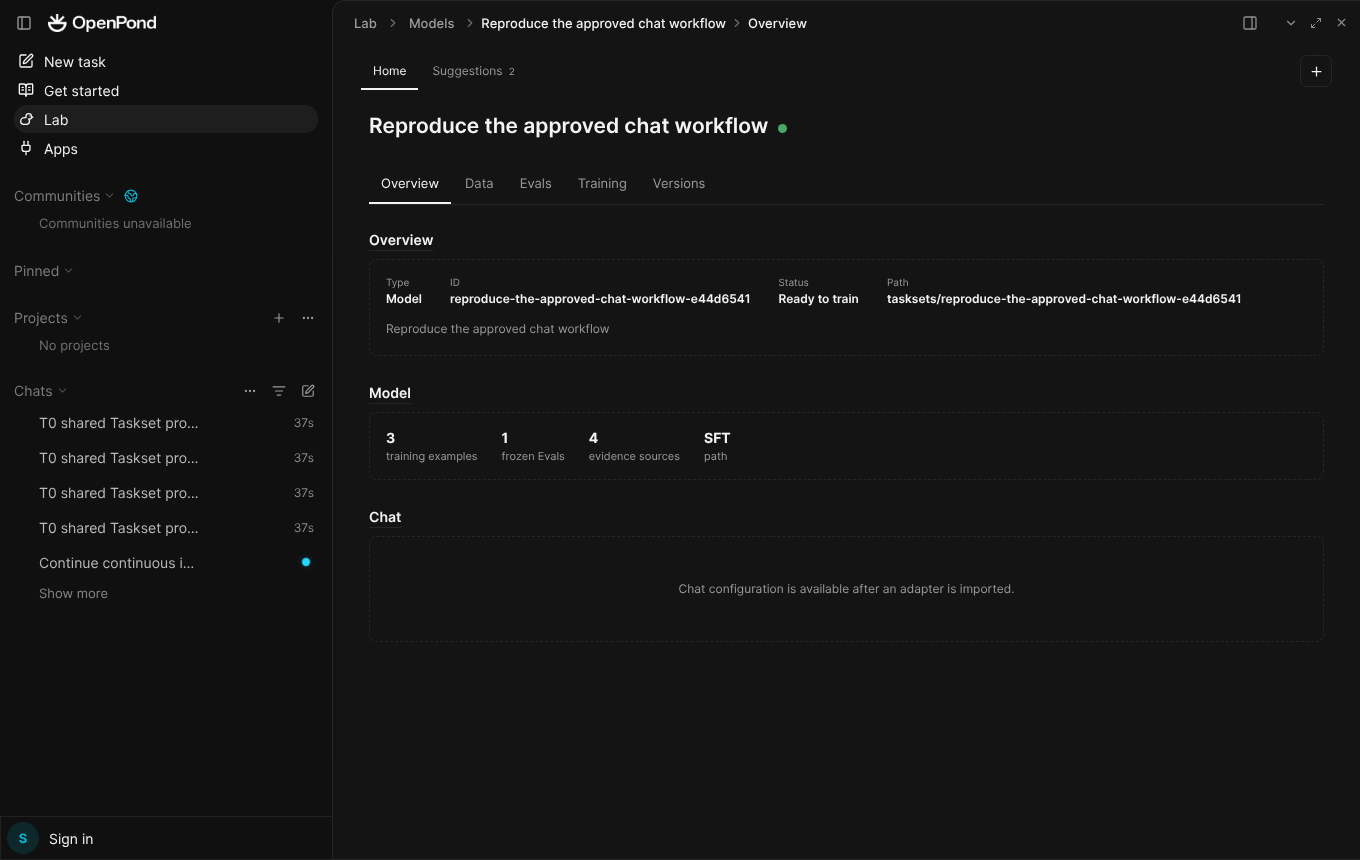
Train and Promote a Model
Training changes model weights. It should be the result of a measured decision, not an automatic response to a failed chat. OpenPond keeps training separate from Refiner and Harness updates so the higher-cost, less-reversible change has its own data, evaluation, budget, and activation gates.
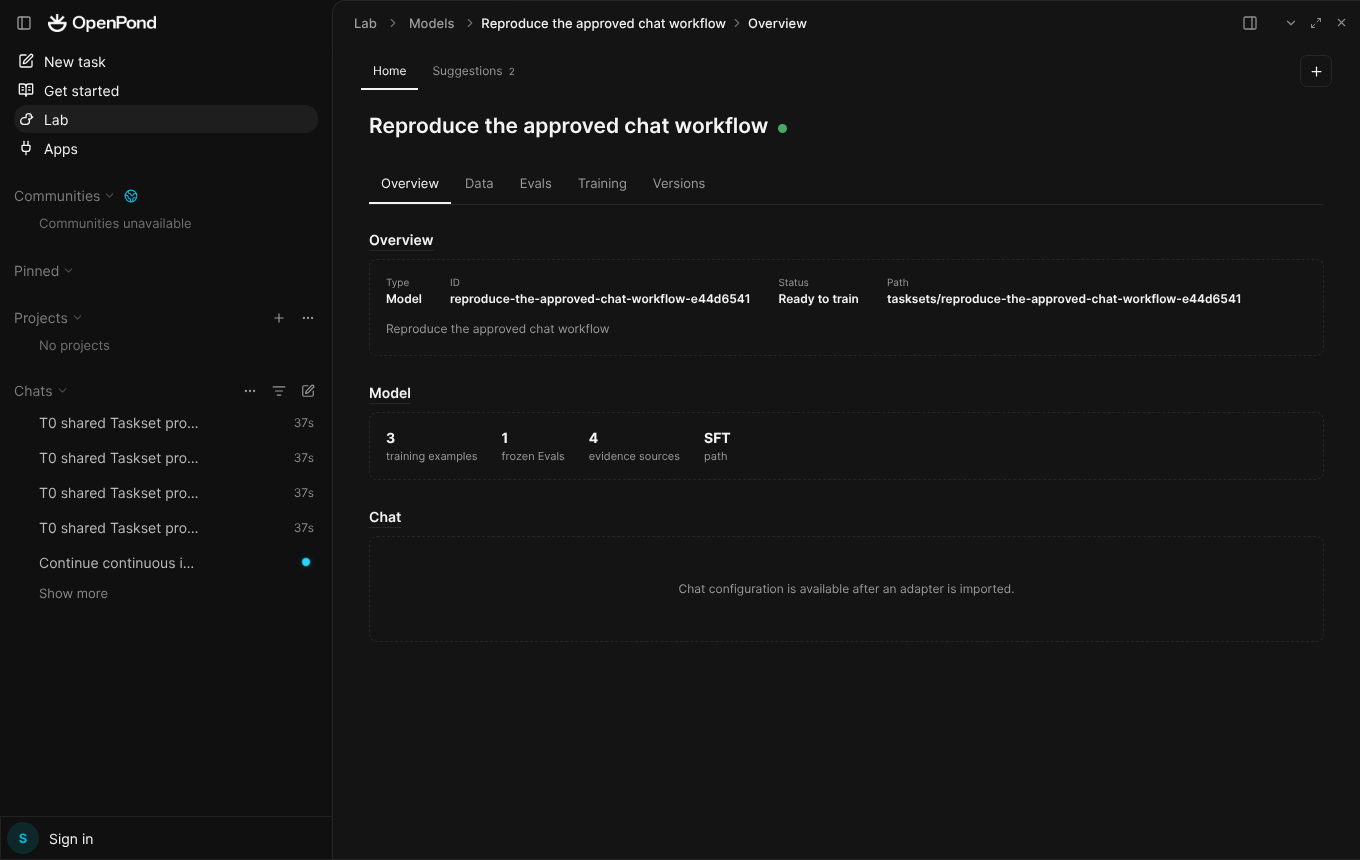
Prepare the evidence first
Start from reviewed chats or another approved source, then create a Taskset. Check that every example has understandable lineage, the graders fit the job, and a frozen evaluation split is not reused as training data.
Choose the method only after that work is ready:
| Method | Good fit |
|---|---|
| SFT | Clear input/output demonstrations |
| Preference training | Reliable relative-quality judgments |
| RL / GRPO | Measurable outcomes across bounded multi-step rollouts |
Review the exact run
In Desktop, open Lab → Models, create the model, then add a training run. Confirm the Taskset revision and hash, starting model, method, compute destination, retention, quote, and maximum spend before selecting Start training.
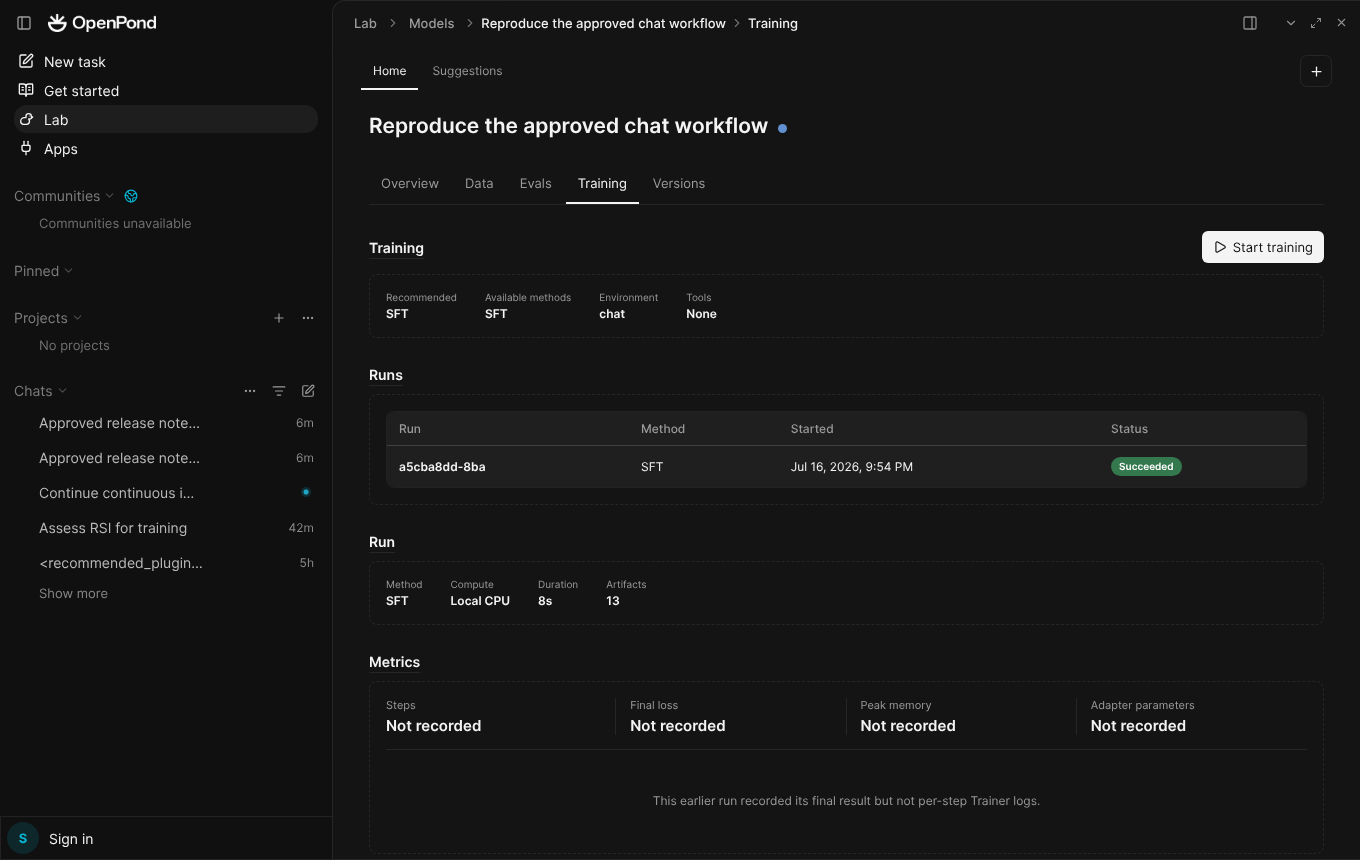
A successful job means the run completed. It does not prove the candidate should be used.
Evaluate and promote
Compare the candidate against the frozen baseline. Inspect failed graders and qualitative behavior. If the evidence does not meet the promotion threshold, keep the candidate unbound, revise the Taskset, and run another candidate.
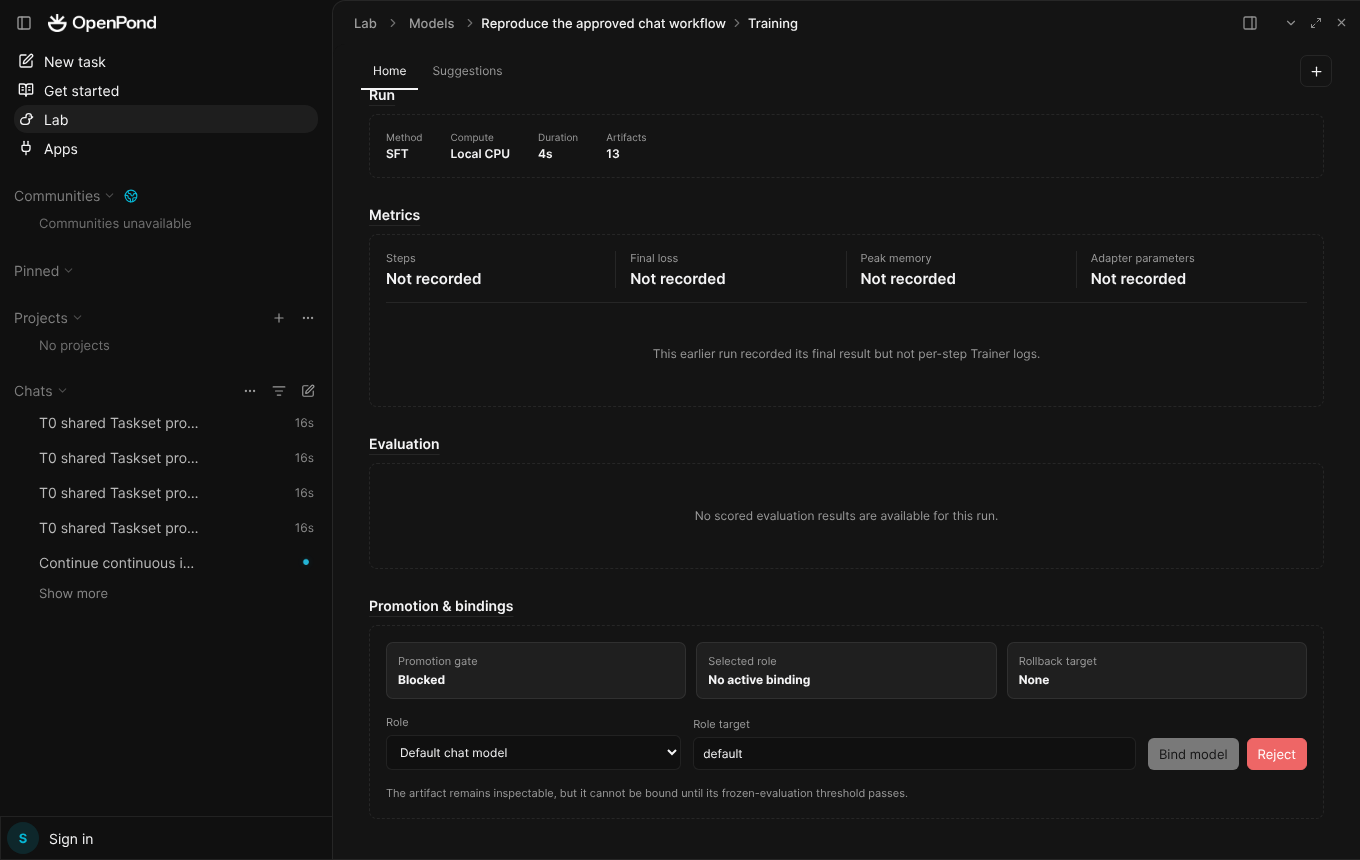
An explicit promotion gate protects the active model binding and makes rollback clear. Follow the full Desktop training guide for the end-to-end workflow.